
Home / Cambelts and wet belts
Cambelts and wet belts
The job where a rushed fit costs you an engine. Brad replaces the belt, tensioners and pulleys as a set, sets the timing himself, and quotes before he starts.
Quote firstNothing is done until you say yes.
Which belt is it?
Most cars have a cambelt. Some newer engines run the belt in oil instead. If you are not sure, send the reg.
- How to tell
- Most cars. The belt sits dry behind a plastic cover at the front of the engine.
- If it fails
- The engine stops, and on many engines the valves hit the pistons.
- How to tell
- Some newer engines. There is no belt cover to see. Send the reg and Brad will check.
- If it fails
- A worn belt sheds bits into the oil, which can block the oil pickup and starve the engine.
How the job goes
Brad takes off the old belt, tensioners and pulleys.
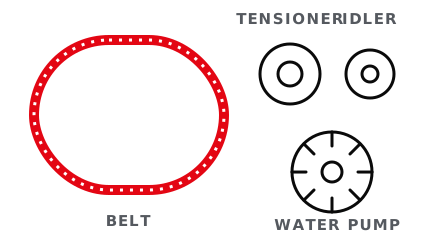
He fits the new parts as a set, with the water pump if the belt drives it.
He sets the timing, checks it, and tells you what he found.
When to get it done
- The interval in your handbook has passed, in miles or in years
- You bought the car used and there is no belt invoice
- You hear ticking or rattling from the front of the engine
- An oil pressure warning has come on (wet belt engines)
What is included
- Belt, tensioners and idler pulleys
- Water pump where the belt drives it
- Parts and labour itemised on the bill
Belt replacement
The price depends on the engine. Send the reg for an exact quote.
Check your belt
Fill this in and it writes the email to Brad for you. He will tell you which belt it is, whether it is due, and what it costs.
No invoice or no idea? Send what you know.
Ring Brad. Get a straight answer.
Tell him the reg and what the car is doing. You get a clear quote, and nothing is done until you say yes.